

LEV1 PLUS: Plants, Whisks & Smoke Sauna camp

Date: 2026-06-15, 14:00
 Location:
 Lithuanian Pirtis with Plants, Whisking and Smoke Sauna
This camp is a practical introduction to Lithuanian pirtis culture through plants, steam, whisks, body care and the rhythm of a complete pirtis procedure.
The programme is focused on Lithuanian bathing tradition, use of local plants and sustainable bathing (smoke sauna). The main focus is now on Lithuanian pirtis practice: how plants are used, how whisks are prepared, how steam is created and guided, how holistic whisking is performed, and how a safe, warm and meaningful pirtis session can be created for family, guests or students.
The course is open to international and Lithuanian students. Teaching will be bilingual: in English and Lithuanian, depending on the group and the practical situation.
Day 1 — Arrival and Lithuanian Pirtis Procedure
The first day is an arrival day. Participants gather in the afternoon, from around 14:00–15:00, settle in, meet the group and enter the atmosphere of the camp.
We begin with a practical introduction to Lithuanian pirtis culture and the structure of a complete pirtis procedure. The focus is simple but essential: how a good pirtis session begins, how the body gradually enters heat, how steam, rest, cooling and care create a complete rhythm.
Participants are introduced to prepared plant materials and natural pirtis care. The plants, herbs, infusions, aromatic waters and body-care mixtures will already be prepared in advance, so this first meeting is not a long forest walk or harvesting session. It is a calm introduction to how plants can be used in the pirtis space.
We explore herbal teas, plant aromas, gentle scrubs, cooling infusions and simple natural body-care preparations. The focus is on direct experience: smell, touch, warmth, steam and comfort.
In the evening we enter the pirtis for the first full experience. This session introduces the basic logic of a Lithuanian pirtis procedure: warming up, soft steam, body awareness, rest, cooling and respectful group rhythm. It helps the group arrive, relax after travel and prepare for the more practical days ahead.
You will experience:
arrival, group introduction, Lithuanian pirtis procedure, prepared plant materials, herbal teas, aromatic pirtis water, simple natural body-care, soft steam and a first evening pirtis session.
You will make or prepare:
a simple personal plant-based pirtis mixture or tea blend, using materials prepared for the first day.
Day 2 — Plants, Whisks and Plant Intelligence
The second day is dedicated to plant knowledge, ethical gathering and the making of whisks.
In the morning we go outdoors to learn about local plants used in Lithuanian pirtis practice. Depending on the weather, timing and group condition, this may include a plant walk, ethical gathering and, if possible, a slower therapeutic walk through the local hillfort landscape.
The aim is practical: to recognise useful trees and plants, understand when and how to gather them, and learn how not to damage the place we take from.
In the afternoon we bind whisks. Birch, oak, maple, willow, hazel, juniper and other plants may be used depending on what is available and appropriate. We look at their different qualities: softness, strength, scent, heat, flexibility and how they feel on the body.
We also discuss how different plants can support different types of pirtis work: gentle warming, stronger stimulation, calming, refreshing, grounding or aromatic effect. The aim is not only to identify plants, but to understand how they behave in steam and on the body.
In the evening we test the freshly made whisks in the pirtis. The focus is simple and practical: how the whisk moves steam, how it touches the body, how different plants feel, and how to use them with care.
You will experience:
plant recognition, ethical gathering, possible hillfort walk, whisk binding, plant qualities, aromatic steam and evening practice with fresh whisks.
You will make:
your own whisk for use in the pirtis.
Day 3 — Holistic Whisking, Steam and Smoke Sauna
The third day is the main practical day of the camp. It is dedicated to holistic whisking, steam work and the experience of smoke sauna.
We begin with the principles of safe and sensitive whisking. Participants learn how to guide steam with the whisk, how to warm the body gradually, how to use rhythm, distance, contact and pauses, and how to adapt intensity to the person receiving the procedure.
The focus is not only on technique, but on the whole experience: body position, breathing, comfort, emotional safety, communication, cooling and rest. Holistic whisking is treated as a complete pirtis practice, not as a set of separate movements.
We practise basic whisking techniques: moving steam, covering the body, soft touch, stronger warming, working with different body zones and finishing the procedure gently. Participants also observe how different whisks behave in heat and steam.
The day also includes preparation for smoke sauna. We discuss the specific character of smoke sauna: fire, soot, stones, smell, softness of heat, patience and respect for the old bathing environment. Depending on the practical situation, participants may help with simple preparation tasks connected to fire, water, whisks and bathing space.
In the evening we enter the smoke sauna. This is the cultural and sensory culmination of the camp: dark wood, fire-heated stones, soft steam, plant aromas, whisks, water, rest and silence. We will have 3 options: wild sauna, traditional medievial pirtis and elebourated super-efficient smoke sauna of individual design by Rimas.
You will experience:
holistic whisking, steam guiding, safe body warming, rhythm and touch, smoke sauna preparation, smoke sauna bathing and a deeper Lithuanian pirtis experience.
You will practise:
basic whisking techniques, steam movement, gentle and stronger warming, body-zone awareness, communication during the procedure and respectful finishing of the session.
Day 4 — Integration, Pirtis Care and Closing
The fourth day is dedicated to integration: how to take the experience home and how to care for the pirtis, the plants, the tools and the place.
The camp closes with a short reflection: what was learned, what can be taken home, and how these skills can be used in future pirtis practice.
You will experience:
integration of the full pirtis procedure, ecological responsibility, pirtis maintenance, final discussion and camp closing.
You will take home:
practical knowledge of Lithuanian pirtis procedure, plants, whisks, steam, holistic whisking, smoke sauna, pirtis care and ecological responsibility.
Accommodation and Practical Details
Participants will stay in a simple shared house located about 1 km from Pirčių sodas, the main place of the course. The house is in a quiet natural area surrounded by forest, so the whole camp keeps a close connection with nature, silence and outdoor living. This is not hotel-style accommodation, but a simple shared living arrangement suitable for a practical nature-based camp.
Accommodation is shared dormitory-style, with space for up to around 10 people. Participants should expect simple, communal conditions: shared sleeping areas, shared facilities and a relaxed group atmosphere.
There is a separate kitchen where food can be prepared. Meals and cooking can be organised practically within the group, depending on the final camp arrangement.
The accommodation place also has a small pirtis/sauna, which may be used in the evenings outside the main course programme. This gives participants an additional opportunity to relax, warm up and enjoy the atmosphere after the day’s activities.
The main course activities take place at Pirčių sodas, about 1 km away. Participants can walk there, or transport by car can be arranged when needed.
The expected accommodation cost is €20–30 per person per night, depending on the final number of people sharing the house.
Overall, the accommodation is part of the camp experience: simple, close to nature, communal and connected with the rhythm of pirtis, plants, fire, water and outdoor life.

Themes covered
-
Bodywork of the back
In this practical theme, we learn the basic techniques of gentle body touch and massage. Soft, relaxing touch is included in all basic sauna techniques and treatments - light bathing, body scrubbing, and massage. The skills on this topic will benefit further training that are included in the Professional Sauna Therapist training program.
Skills developed in the workshop
- Preparation for bodywork, laying a person down
- skin stroking
- warming rubbing
- oiling the skin
- working on the deeper subcutaneous tissue
- ergonomics and safety of movements
- effective transverse work
-
Healthy steam bath procedure
The first practical theme(topic) of the Bath Masters course is the Healthy Sauna Procedure. It is dedicated to learning about a healthy, bioresonant sauna. During the sauna, we go through a complete sauna procedure consisting of 4 stages:
- introductory warm-up
- sweating stimulation
- Soaking in the steam and self-bathing
This workshop is essential for those wishing to continue their studies and further their knowledge, but it is also available simply to try a healthy sauna treatment in a good sauna (often with a good gourmet sauna stove).
-
Holistic whisking
A practical theme to learn and test the work of a sauna master. The first steps towards a new profession take place in a safe environment, in a good sauna, with the help of an experienced trainer. This topic is usually taught in the form of a sauna evening (a practical session in the sauna), during which the teacher introduces and demonstrates the main points of practical work in the steam room and the students try it out in practice. In this way, they have the opportunity to test themselves as future sauna practitioners and get a better idea of the level at which they would like to learn the sauna trade.
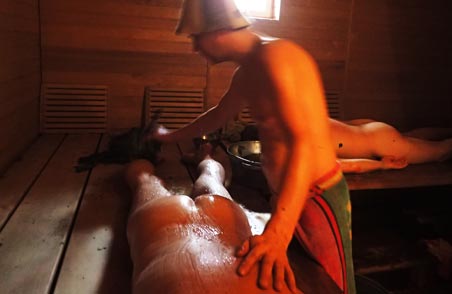
A student washes clients body in a steam room for the first time.
This theme has additional information available only to logged in users. -
Introduction to sauna plants
Step into the fragrant world of the Lithuanian steam bath, where plants are not just decoration—they are inherent to the sensory, therapeutic, and ritualistic character of the pirtis. In this introductory course, students become acquainted with the overall types of herbal preparations utilized in sauna culture: whisks, infusions, decoctions, fragrant extracts, and more.
You'll learn how sauna plants have been used traditionally to promote health and mood—from calming herbal teas to fragrant brooms hung over the hot bench.
This theme has additional information available only to logged in users. -
Making whisks
Practical theme, which includes:
- collecting and preparing twigs;
- types of whisks;
- ways of making whisks;
- quality requirments;
- conservation of whisks.
-
Recognising plants
Excursion to the nature, looking for the plants to be used in sauna. Collecting herbs and branches for whisks. Rules of collecting plants.
-
Self whisking
Important theme and one of major aspects of sauna education that is very often neglected by even prominent bath mastership teachers. Yet it is even more complex then whisking other person.
This theme covers
- initial warming of the feet
- enhancing blood circulation
- self massage with whisks
- self whisking of shoulders, sides, back
- ergonomics of self whisking
- different postures: sitting, laying
-
Steam bath basics
Theoretical theme. Contens:
- Definition of steam bath
- Purpose of bath procedure
- Body reaction to heat
- Quality factors of healthy bath
- Correct heating and cooling
- Safe behaviour in sauna
- Eating and drinking in bath
- Most comon mistakes
This theme belongs to Healthy steam bath ABC seminar and opens the whole course of bath mastership studies.
-
Whisking with different whisks
Practical theme which includs:
- testing different whisks;
- whisks for steaming, whisking, heat protection, natural aromatherapy, scrubing;
- using different types pf whisks ir whisking scenario.
A glimpse to seminar

This theme has additional information available only to logged in users.

Presented by
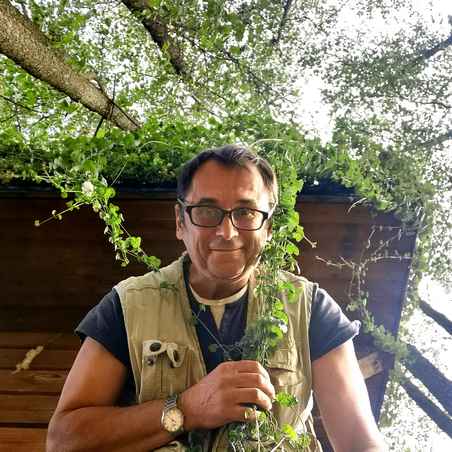
Rimas Kavaliauskas
Participant feedbacks
I really enjoyed it and loved the discovery of experiencing sauna with regard to the four seasons. It makes so much sense now.
The four seasons being in alignment with the sauna "journey."
Merits and challenges of elements. I became to associate rituals procedures more with elements ( fire, water, air, earth).
Events

- « October, 2026 »
- Mon
- Tue
- Wed
- Thu
- Fri
- Sat
- Sun
- 1
- 2
- 3
-
 October
3
(saturday)
Lithuanian Pirtis from Fire to Steam/ Lev1
October
3
(saturday)
Lithuanian Pirtis from Fire to Steam/ Lev1
-
- 4
- 5
- 6
- 7
- 8
- 9
- 10
- 11
- 12
- 13
- 14
- 15
- 16
- 17
- 18
- 19
- 20
- 21
- 22
- 23
- 24
- 25
- 26
- 27
- 28
- 29
- 30
- 31
Ask a question
Please login to ask question
Events
Healthy sauna basics. Theory.


