

Community Bath Master: Part 3. Whisking and full practice.

Date: 2026-08-05, 15:00
Organizer : Lithuanian Bath Academy
Classical Whisking & Guiding the Complete Pirtis Procedure
The final part of our Community Bath Master training in Norway brings the entire course together. During the first two modules, you have learned how to create a healthy pirtis microclimate, work with steam and plants, use light and effective whisking techniques, protect their own body in the heat, and perform natural body scrub.
In this final two-day module, these skills will be connected into one coherent pirtis experience.
The training focuses on two essential areas:
- Classical full-body whisking
- Guiding a complete pirtis procedure from beginning to end
The course is highly practical. Participants will work with one another, guide procedures, receive feedback, and strengthen their confidence as bath masters.
Course Program
Day 1: Classical Full-Body Whisking
Classical whisking is the central individual body treatment of the Lithuanian pirtis tradition.
It is not simply striking the body with whisks. It is a carefully structured process of warming, moving steam, touching, pressing, stimulating circulation, and gradually bringing the body into deep relaxation.
During the previous module, we developed the foundations: light whisking, steam control, ergonomic movement, and non-verbal communication. Now these elements will be connected into a complete classical whisking sequence.
You will learn how to:
- Create and maintain a controlled “steam pillow” above the body
- Begin with non-contact heating and gradually introduce physical contact
- Warm the body evenly and safely
- Perform a structured full-body whisking sequence
- Work with the back, legs, feet, arms, shoulders amd front of the body
- repeat stroking, vibration, pressing, compresses, and rhythmic whisking
- Support and whisk the feet effectively
- Move smoothly between different techniques
Ergonomics and Self-Protection
Professional work in the steam room must be sustainable.
Special attention will be given to:
- Stable and safe working positions
- Efficient use of the wrists and body weight
- Avoiding unnecessary tension in the arms and shoulders
- Moving safely around the bench
- Managing your own exposure to heat
- Preserving energy during several procedures
A skilled bath master should be able to work calmly and precisely without exhausting themselves.
Day 2: Guiding the Complete Pirtis Procedure
On the second day, we move from separate techniques to the complete responsibility of the bath master.
You will learn how to guide a full pirtis session – from preparing the steam room to the final cooling and rest.
The complete procedure may include:
- Preparing the steam room and bathing space
- Welcoming participants and introducing the session
- The first gentle heating phase
- Working with steam, scents, and plants
- Self-whisking and group activities
- Cooling and resting periods
- Natural body scrubbing and washing
- Classical full-body whisking
- Final warming, rinsing, cooling, and recovery
- Calmly closing the session
A complete pirtis procedure is not a random collection of techniques. It has a clear rhythm and progression.
The bath master must understand when to introduce heat, when to allow the body to rest, when to use plants, and how to move naturally from one stage to another.
You will practice how to:
- Create a clear beginning, development, culmination, and ending
- Gradually increase the intensity of heat
- Balance active procedures with silence and rest
- Integrate whisking, scrubbing, washing, cooling, and recovery
- Maintain the correct rhythm throughout the session
- Avoid overloading the procedure with too many activities
- Use voice, body language, and silence appropriately
- Manage time without making the session feel rushed
- Coordinate the work of the bath master and assistants
- Maintain safety and a calm atmosphere
Who Is This Training For?
This final module is intended primarily for participants who have completed the previous two training weekends:
- Healthy Pirtis Foundations, Microclimate, and Holistic Whisking
- Effective Whisking Techniques and Natural Body Scrubbing
It is designed for people who want to guide complete pirtis experiences for their families, friends, communities, or sauna guests.
Location
Holmestrand Sauna
Fjordveien 19b, Holmestrand, Norway
The training takes place beside the fjord in a modern traditional sauna environment, with access to cooling facilities and a jacuzzi for recovery between practical sessions.
Themes covered
-
Basic whisking therory
Whisking is a fundamental ritual within the tradition of steam bathing, a practice that goes beyond mere heat application to create a deeply immersive, sensory experience. It is not just a technique but a philosophy—a means of connecting with heat, touch, and nature while enhancing the sauna’s therapeutic effects. In this theme, we explore the history, methods, benefits, and nuances of whisking.
This theme has additional information available only to logged in users. -
Body reaction to heat
A sauna master must adjust sauna procedures to the needs of each client, adjusting heat, steam, water temperature, and session duration accordingly. Sauna work is a live process, like a ship captain making impromptu decisions, and there is no time to check answers on the Internet—one must watch the subtle cues of a man's condition and adjust the procedure in a split second.
This webinar is all about understanding how sauna heat dynamically affects the body—how the internal temperature rises, the circulation changes, and skin pores open. Subjects vary from how the sauna acts on joints, muscles, and the respiratory system to why dizziness occurs and how it affects immunity and hormonal balance. Sweating, detoxification, how heat acts on internal organs like the liver, and how it affects the nervous system will be discussed with the newest scientific research.
This theme has additional information available only to logged in users. -
Classical whisking
A practical topic that is a natural extension of "Easy whisking". We apply the techniques we have already learnt more intensively and learn to apply them to different parts of the body.
This time we are working with a richer steam, as is usual in many saunas. During the workshop, we learn how to fully steam these parts of the body:
- feet (lying down and lifting them up),
- legs - thighs (lying down, lifting them up, turning them over),
- knees,
- shins hands - hands,
- biceps,
- arms (holding them up, lifting them up)
- abdomen (swiping them up, stroking them,
- chest (swinging) chest (swiping, stroking),
- neck
- sacrum (lower back)
- shoulders, shoulder blades
Students are also taught general bathing strategy, ergonomics of bathing, principles of safe bathing.
This theme has additional information available only to logged in users. -
Conducting a traditional pirtis ritual

A practical theme where teache the following topics:
- Sauna procedure strategy, number of visits, and intensity.
- Bioresonance body heating.
- Sweating promotion procedures.
- Proper use of salt in the sauna.
- Comfortable seating for people with special needs.
- Children in the sauna.
- Basic safety rules for the procedure.
- Organization of wiping for a small group.
- Organization of honey rubbing for a small group.
- Skin scrubbing with birch branches.
- Basics of sauna microclimate control.
This theme has additional information available only to logged in users. -
Introduction to sauna plants
Step into the fragrant world of the Lithuanian steam bath, where plants are not just decoration—they are inherent to the sensory, therapeutic, and ritualistic character of the pirtis. In this introductory course, students become acquainted with the overall types of herbal preparations utilized in sauna culture: whisks, infusions, decoctions, fragrant extracts, and more.
You'll learn how sauna plants have been used traditionally to promote health and mood—from calming herbal teas to fragrant brooms hung over the hot bench.
This theme has additional information available only to logged in users. -
Skin in thermal bath
What is skin?
As Lithuanian philosopher Vydūnas eloquently stated, “Skin is the truest mirror of human health… a third brain where body and world meet, reflecting vitality and spirit.” More than a mere covering, skin mediates between our inner selves and the outer environment, channeling sensations and safeguarding life. In the sauna, this remarkable organ—spanning 1.5-2 square meters and weighing 5-10 kg—comes alive. Heat awakens its 2 million sweat glands, flushing out toxins (up to 3.5 times more than the kidneys or intestines) and softening its surface for care. With a quarter of our blood circulating through it, skin in the sauna reveals its power as both protector and healer, glowing with youth and beauty when nurtured well.
Fascinating Skin Facts:
Largest human organ, 0.5-4 mm thick.
Circulates 25% of the body’s blood.
Releases 100-150 g of sebum weekly via sebaceous glands.
A natural detox powerhouse.Discover how the sauna transforms this living shield into a canvas of wellness.
This theme has additional information available only to logged in users. -
Steam bath basics
Theoretical theme. Contens:
- Definition of steam bath
- Purpose of bath procedure
- Body reaction to heat
- Quality factors of healthy bath
- Correct heating and cooling
- Safe behaviour in sauna
- Eating and drinking in bath
- Most comon mistakes
This theme belongs to Healthy steam bath ABC seminar and opens the whole course of bath mastership studies.
-
Traditional sauna maintenance

Sauna maitenance is a good part of using it...Young owners are helped and advised by everyone who is not lazy - from relatives to online forums. Let's take a look at the most common questions for current (and perhaps future) sauna owners.
Themes and topics presented in this workshop:
- Short review of steam bath ovens
- Bathing utensils
- Getting ready for heating
- Firewood types
- Peculiarities of heating different ovens: continuous heating ovens, periodically heated ovens, smoke saunas.
- Ventilation: before, during and after bathing
- What can not be used in bathing:benches, floors, vessels, used whisks, adjacent rooms.
- Disinfection: acohol, plant decoctions, essential oils, hot water and steam, hydrogen peroxide;
- Fire safety.
- Ecological requirements for sauna use.
- FAQ
FAQ that will be answered
- Avoiding bad smell?
- Mold extermination?
- Changing sauna stones?
- Avoiding carbon monoxide?
- Impregnating benches and walls?
- Whitening dark walls?
- Back seats. Are they necessary?
- Use of plastic in sauna?
Presented by
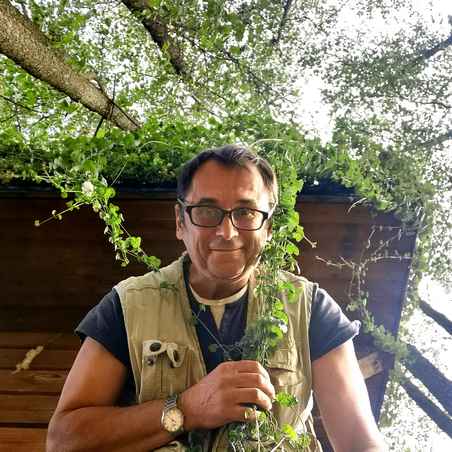
Rimas Kavaliauskas. He has spent over 22 years teaching, researching, and systematizing the Lithuanian pirtis tradition. He is the founder of the Lithuanian Bah Academy and has trained practitioners across Europe — from the Ireland to Scandinavia.
Rimas does not lecture at you. He works with you — adapting the material to your questions, your space, and your goals. Whether you have a cabin by the fjord, a mobile sauna, or simply want to transform the way your family experiences the badstu, the training meets you where you are.
During the weekend, you will also have the chance to meet local alumni of the International Bath Academy who are already practicing in the region.
Participant feedbacks
I enjoyed the topics on healthy bacteria and living with it in the sauna, cleaning topic gave me the most practical tips!
The ideal ventilation of the sauna for sitting and whisking is different. So called Gust ventilation. Bath master needs to take care of total coordination of how guests spend time in sauna including meeting point and any procedures.
The mistakes made in sauna layout was a good illustration of what not to do. I also learned about the importance of having warm water with the Sauna experience. Not something I had considered before.
I really enjoyed it and loved the discovery of experiencing sauna with regard to the four seasons. It makes so much sense now.
The four seasons being in alignment with the sauna "journey."
Merits and challenges of elements. I became to associate rituals procedures more with elements ( fire, water, air, earth).
Events

- « October, 2026 »
- Mon
- Tue
- Wed
- Thu
- Fri
- Sat
- Sun
- 1
- 2
- 3
-
 October
3
(saturday)
Lithuanian Pirtis from Fire to Steam/ Lev1
October
3
(saturday)
Lithuanian Pirtis from Fire to Steam/ Lev1
-
- 4
- 5
- 6
- 7
- 8
- 9
- 10
- 11
- 12
- 13
- 14
- 15
- 16
- 17
- 18
- 19
- 20
- 21
- 22
- 23
- 24
- 25
- 26
- 27
- 28
- 29
- 30
- 31
Ask a question
Please login to ask question
Events
Healthy sauna basics. Theory.


