
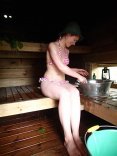
Lithuanian Pirtis from Fire to Steam/ Lev1
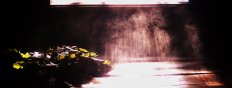
Date: 2026-10-03, 10:00
Organizer : Lithuanian Bath Academy
What does it actually take to make a good sauna? Not a luxury interior. Not complicated automation. Not necessarily a large budget. On October 3, we invite sauna enthusiasts, builders, bath masters and curious visitors to Švenčionys for a full day built around a very simple idea: we will assemble a working smoke sauna, fire it, prepare it properly – and then bathe in it. This is a chance to see the whole process rather than only the finished result. Fire. Stones. Structure. Heat. Water. Steam. The human body. And finally – a real traditional Lithuanian pirtis session.
A sauna you can understand
The centre of the day will be a self-built smoke sauna designed by Rimas Kavaliauskas, sauna designer, teacher and founder of the Lithuanian Bath Academy.
Rimas has spent decades studying, designing and teaching traditional steam bathing. His approach starts with a simple question:
What actually makes a sauna feel good?
A good hot room is not defined by the temperature shown on a thermometer. Radiation, convection, hot surfaces, humidity, steam, the stove, stones, ventilation and the way people use the room all work together.
During this event we will be able to look at these factors in practice. The purpose is not to present a perfect architectural object. It is almost the opposite.
We want to show how much can be achieved when you understand the basic principles of heat, fire, steam and the human body – and how surprisingly simple a working pirtis can be.
Programme
10:00 – Gathering and opening
We meet at Lentpjūvės Respublika in Švenčionys.
11:00 – We light the smoke sauna
The sauna will be fired for approximately four hours.
Participants will be able to follow the preparation process: firing, heat accumulation, stones, ventilation and the transition from a fire-heated structure into a bathing space.
While the sauna is heating, talks and discussions will take place indoors.
What Really Heats Us in a Pirtis?
Why can one sauna feel aggressively hot without warming the body well, while another feels softer but produces deep, pleasant warmth?
We will look at the different ways heat reaches the human body:
- thermal radiation;
- hot air and convection;
- steam;
- heated surfaces;
- water;
- whisking and air movement;
- the rhythm of heating and cooling.
Instead of discussing sauna temperature as a single number, we will look at the hot room as a complete thermal system.
The Craft of the Bath Master
Birutė Masiliauskienė
What separates somebody who knows a few whisking movements from a bath master who can actually guide another person through a good pirtis experience? Birutė, a long-time Lithuanian pirtis practitioner and international teacher, will speak about the less visible side of the profession: reading the person, working with heat, choosing intensity, structuring a procedure, responsibility and creating trust in the hot room. The discussion will be relevant both to practising bath masters and to people who are only beginning to consider this path.
Whisk market
There will also be a small whisk market during the event. Autumn is a good time to look at different whisks, compare them, ask questions and stock up for the colder season.
15:00–18:00 – Traditional Pirtis
Then theory becomes experience. After approximately four hours of firing, the smoke sauna will be prepared for bathing.
Traditional pirtis practitioners will guide the bathing programme. You will experience heat, steam, whisks, warming, cooling, rest and the rhythm of a traditional Lithuanian steam bath – in the same sauna whose preparation you have been watching during the day.
An outdoor shower will also be available.
After the pirtis – pizza by the fire
When the bathing programme finishes, there will be time to stay, talk and eat together. Fresh pizza will be baked over fire and can be purchased separately on site.
Who is this day for?
Come if you:
- are thinking about building your own sauna;
- already own one and want to understand it better;
- work as a sauna or pirtis practitioner;
- are interested in smoke saunas;
- want to understand sauna microclimate rather than simply chase higher temperatures;
- are curious about Lithuanian steam-bath culture;
- or simply enjoy spending time with people who take sauna seriously.
This is neither just a lecture day nor simply a sauna party.
It is the whole journey of a pirtis in one day – from fire to steam.
Practical information
Date: Saturday, October 3, 2026
Place: Lentpjūvės Respublika, Švenčionys, Lithuania
Start: 10:00
Smoke sauna firing: 11:00
Traditional bathing programme: approximately 15:00–18:00
The event is open to international participants.
Want to go deeper?
For international visitors, October 3 can also become the first day of a longer Lithuanian pirtis journey. On October 4–6, immediately after this event, the International Bath Academy will run the three-day practical part of IBA Level 1 – Community Bath Master at Sauna Garden near Vilnius.
October 3: see how a pirtis works.
October 4–6: learn how to work inside it.
October 4–6, 2026 | Sauna Garden, Lithuania
You can enjoy a good sauna without knowing exactly why it works. A bath master cannot.
For three days at Sauna Garden near Vilnius, we will move beyond being guests in the hot room and begin learning how to take responsibility for what happens inside it.
This course covers the full practical part of International Bath Academy Level 1 – Community Bath Master.
It is intended both for people beginning their bath-master journey and for sauna practitioners who already have some experience but want a structured foundation in Northern and Eastern European steam-bath practice.
We learn by entering the pirtis, observing, trying, receiving feedback and repeating.
During the three days participants will work with the basic practical elements of a healthy traditional steam-bath procedure:
The objective is not to memorise an impressive sequence of movements. The objective is to understand what you are doing, why you are doing it, and what the person on the bench is actually experiencing.
One of the strongest parts of this training is the opportunity to practise in two contrasting traditional steam baths.
This is a clean, chimney-equipped traditional Lithuanian steam bath. It allows us to work with a controllable hot-room environment, stones and generous steam – what we sometimes call “white steam.”
Here students can concentrate on the relationship between the stove, steam, body position, whisk movement and the person receiving the procedure.
The second hot room is something much more unusual. At Sauna Garden we use a highly efficient clean smoke sauna designed by Rimas Kavaliauskas. It keeps the essential principle of smoke-sauna firing while solving several practical problems traditionally associated with soot and preparation.
Only three saunas based on this particular design concept have been built in the world. For a bath-master student, the difference is valuable. The same body, the same water and similar whisks can feel very different when the thermal environment changes. Learning to recognise that difference is part of learning the profession.
Whisking is visually impressive, so it often becomes the public image of Baltic and Lithuanian pirtis.
But Level 1 begins earlier. Before trying to perform elaborate whisking, a bath master needs to understand how to: warm, observe, touch, communicate, use steam and maintain a safe rhythm.
A good procedure is built from these elements. The whisk then becomes another tool in an already functioning system – not a performance added on top of it.
The training is suitable for:
Previous professional bath-master experience is not required.
A willingness to work closely with other students is.
During training, students practise on one another. You will therefore experience the course from both sides: as the practitioner and as the person receiving the procedure.
The €360 course fee covers the three-day practical training only.
The theoretical part of IBA Level 1 is not included in these three days. Theory is taught separately through International Bath Academy and forms the other part of the complete Level 1 programme. This arrangement allows our three days in Lithuania to remain genuinely practical: instead of spending valuable sauna time sitting through lectures, we can concentrate on observation, repetition, correction and real work in the hot room. Students wishing to complete the full IBA Level 1 pathway can add the required theoretical studies separately.
€300 per person for all three practical training days. The fee does not include accommodation or the separate theoretical part of Level 1.
International students can stay in a separate house located close to Sauna Garden.
Accommodation is intentionally simple:
This is not hotel accommodation. It is a practical, inexpensive place to sleep and stay with the group between training days. For many students, this communal side of the course becomes part of the experience: sauna conversations tend to continue long after everybody has left the hot room.
If you are travelling to Lithuania for the course, we strongly recommend arriving one day earlier.
On Saturday, October 3, the Lithuanian Bath Academy is organising Build It Yourself: Lithuanian Pirtis from Fire to Steam in Švenčionys. During that day we will assemble and fire a simple smoke sauna, discuss what actually creates good sauna heat, talk about the craft of the bath master and finish with a traditional guided pirtis session. Then, on the following morning, the focus changes.
October 3: see how a pirtis works.
Together, the two events create four consecutive days of fire, steam, traditional bathing and practical education in Lithuania. You can attend either event separately or join both.
IBA Level 1 – Community Bath Master
Three Days of Hands-On Lithuanian Pirtis Training
Three days in the hot room
Learn in two very different pirtis environments
Traditional chimney pirtis – “white steam”
The clean smoke sauna
Not just whisking
Who is this course for?
Important: theory is separate
Course fee
Simple group accommodation
Make it a four-day Lithuanian pirtis journey
October 4–6: learn how to work inside it.
Presented by
Professional bath master and international teachers:
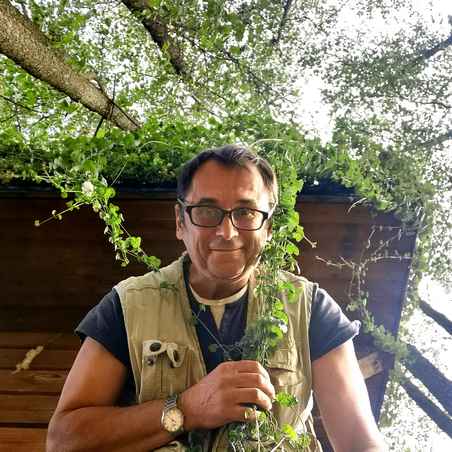
Rimas Kavaliauskas
Events

- « October, 2026 »
- Mon
- Tue
- Wed
- Thu
- Fri
- Sat
- Sun
- 1
- 2
- 3
-
 October
3
(saturday)
Lithuanian Pirtis from Fire to Steam/ Lev1
October
3
(saturday)
Lithuanian Pirtis from Fire to Steam/ Lev1
-
- 4
- 5
- 6
- 7
- 8
- 9
- 10
- 11
- 12
- 13
- 14
- 15
- 16
- 17
- 18
- 19
- 20
- 21
- 22
- 23
- 24
- 25
- 26
- 27
- 28
- 29
- 30
- 31
Ask a question
Please login to ask question
Events
Healthy sauna basics. Theory.


